
1) The wider khaja family across eastern trade routes
Long before Khirer Goja had a local identity, the broader khaja-goja family travelled through eastern India as a festive, layered sweet tradition. Variants appeared in bazaars, pilgrim towns, and courtly kitchens from Bihar to Odisha, then onward into Bengal. The core idea remained consistent: folded dough, patient frying, and a texture that moved between crisp shell and rich interior.
2) Medinipur as the crossing point
Medinipur sat at an important cultural threshold where traders, migrants, temple circuits, and local food traditions overlapped. In that crossing, recipes were not copied; they were translated. Ingredients changed with soil and season, and methods adjusted to the preferences of local households. Khirer Goja emerged from this contact zone, shaped by exchange rather than isolation.
3) The Odia link and evolution from Khasta Goja
One strong ancestral thread points to Odia Khasta Goja, known for flaky bite and disciplined lamination. As the style moved eastward, its structure stayed recognizable, but the filling and finishing began to shift. In Midnapore kitchens, the sweet slowly loosened from its earlier form, keeping its layered body while opening itself to richer dairy-centered interpretation.
“In Bengal, milk is not an ingredient alone—it is an obsession, a language of sweetness, and a measure of care.”
4) How Bengali moiras transformed it through milk and khoya
Bengali moiras took the inherited layered shell and enriched it with the region's dairy logic. Khoya entered the story not as decoration, but as identity—deepening flavor, adding weight, and balancing crispness with softness. This intervention turned a familiar trade-route sweet into a local craft expression, where technique and tenderness met in equal measure.
5) Why Midnapore preserved it apart from Bengal's chhena tradition
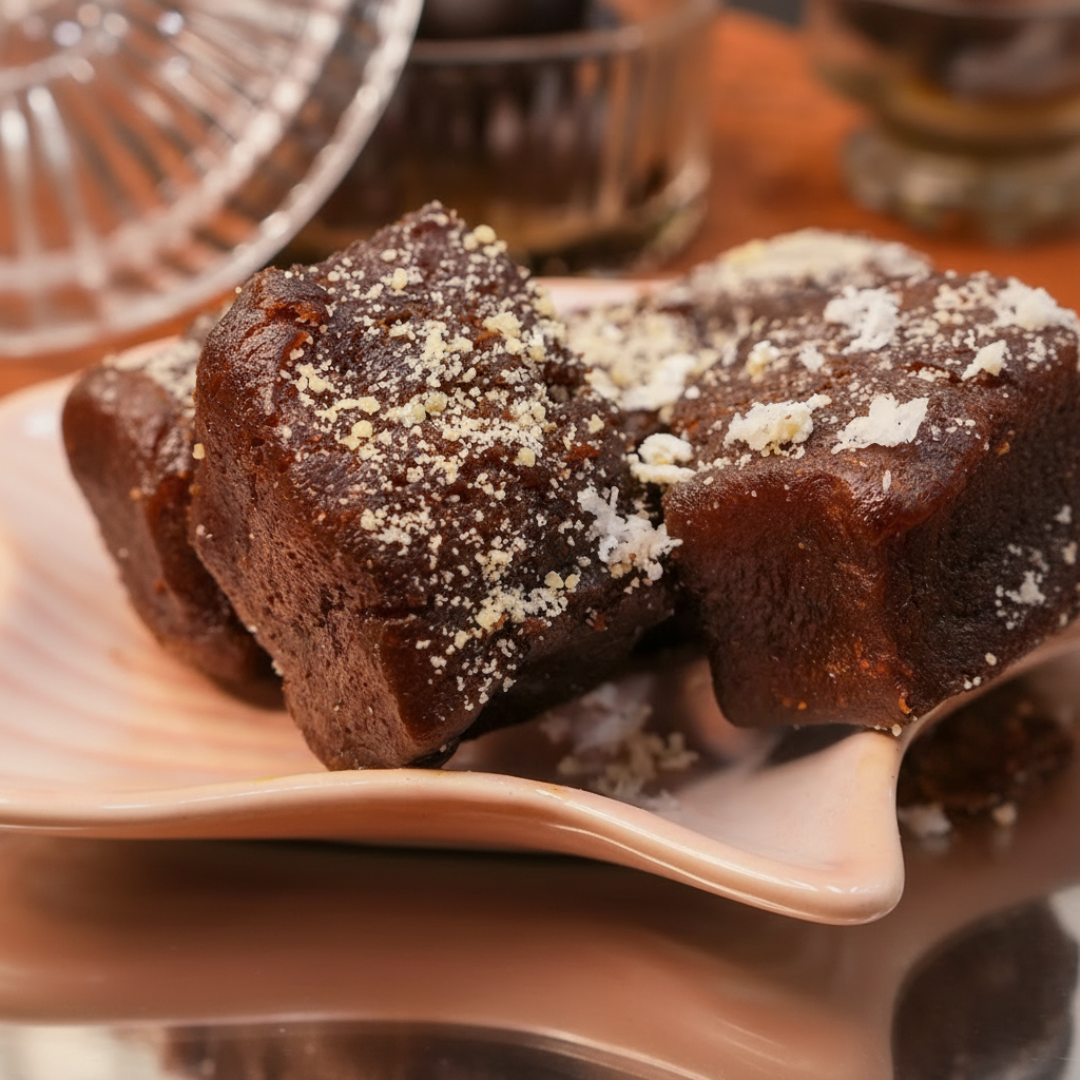
While much of Bengal's sweet canon came to be defined by chhena, Midnapore preserved a parallel memory of layered dough and cooked milk solids. Khirer Goja survived because communities kept buying it for rituals, travel, and gifting, and confectioners kept honoring the older method. Today it stands as proof that Bengali sweetness has more than one lineage—and that heritage lives in the recipes that refuse to disappear.