1) The rasgulla foundation and the meaning of the name
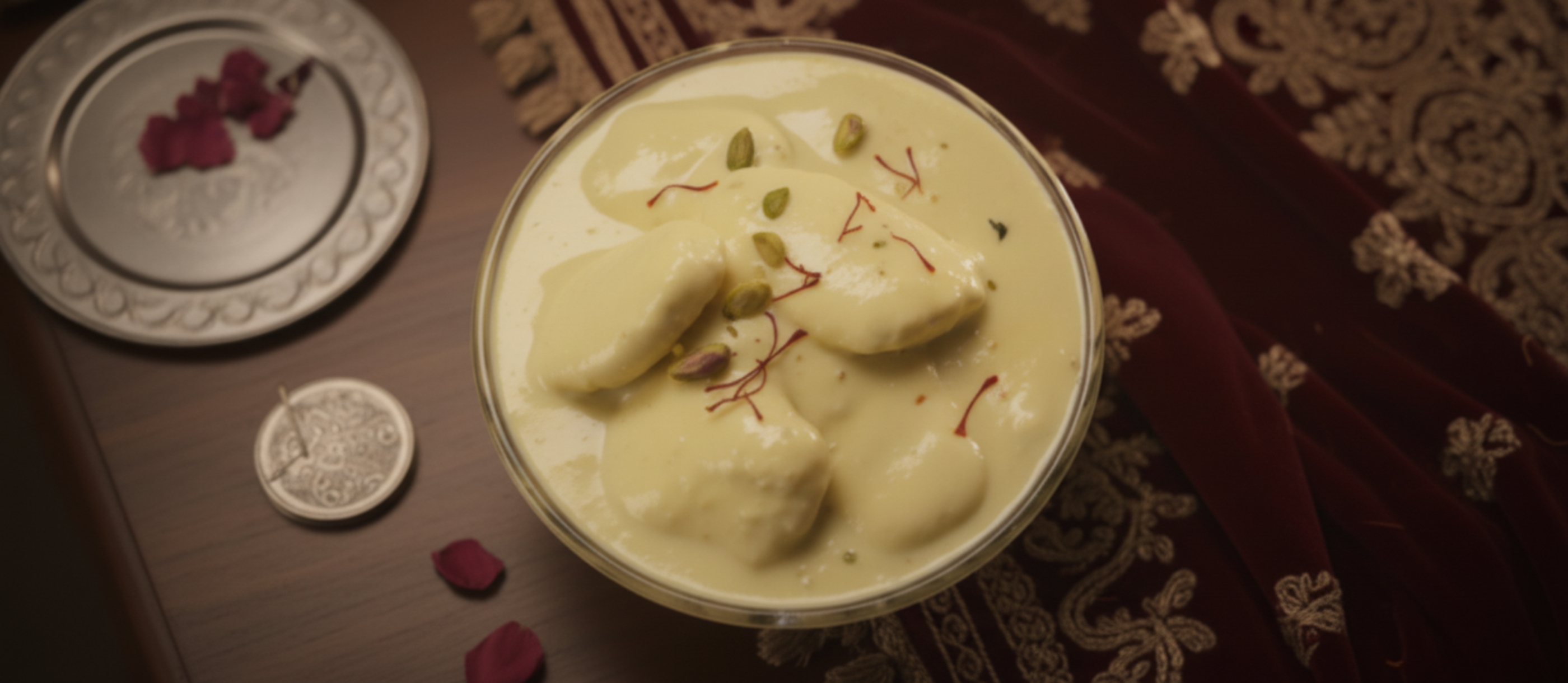
Most accounts begin with rasgulla: soft chhena dumplings cooked in syrup. Rasmalai appears to evolve from that base by pressing or flattening the dumplings and serving them in reduced, lightly sweetened milk. The name itself is often read as a compound of “ras” (juice or syrup) and “malai” (cream), describing a sweet that bridges syrup tradition and milk richness.
2) The Kolkata claim through K.C. Das
One influential narrative credits the sweet to Kolkata confectioner K.C. Das, whose family legacy is already central to modern rasgulla history. In this account, rasmalai emerges in the city as a refined innovation: the familiar chhena base reworked into a creamier, festival-ready form that matched urban tastes and formal sweet-shop presentation.
3) The Comilla claim through the Sen brothers and Matri Bhandar
A second well-circulated claim locates rasmalai in Comilla, tied to the Sen brothers and the sweet shop Matri Bhandar. Here, rasmalai is remembered as a local specialty that gained renown through craft consistency and loyal patronage. For many families in and around Comilla, this line of memory is not peripheral folklore but a lived culinary inheritance.
“Rasmalai is one of the few Bengali sweets remembered through two rival, well-documented origin claims rather than one settled founding story.”
4) Why the dispute remains genuinely unresolved
The debate persists because both sides present credible strands of evidence: family histories, shop records, regional testimony, and long public association. Documentation from the period is uneven, and culinary ideas often travelled informally before written attribution caught up. In that gap between memory and archive, certainty becomes difficult, and both narratives retain legitimacy in public discourse.
5) How rasmalai spread across the subcontinent afterward
Whatever its exact birthplace, rasmalai moved quickly beyond its early centers and became a shared celebratory sweet across South Asia. Regional kitchens adjusted sweetness, milk thickness, garnish, and serving style, yet the core identity remained intact: delicate chhena in fragrant milk. Today, that broad adoption reflects not a loss of origin, but the strength of a sweet rooted deeply enough to travel.